


My biweekly read-around...
Machines, automation, bots, teaching assistants, chaos monkeys, forecasts,& much MOAR…
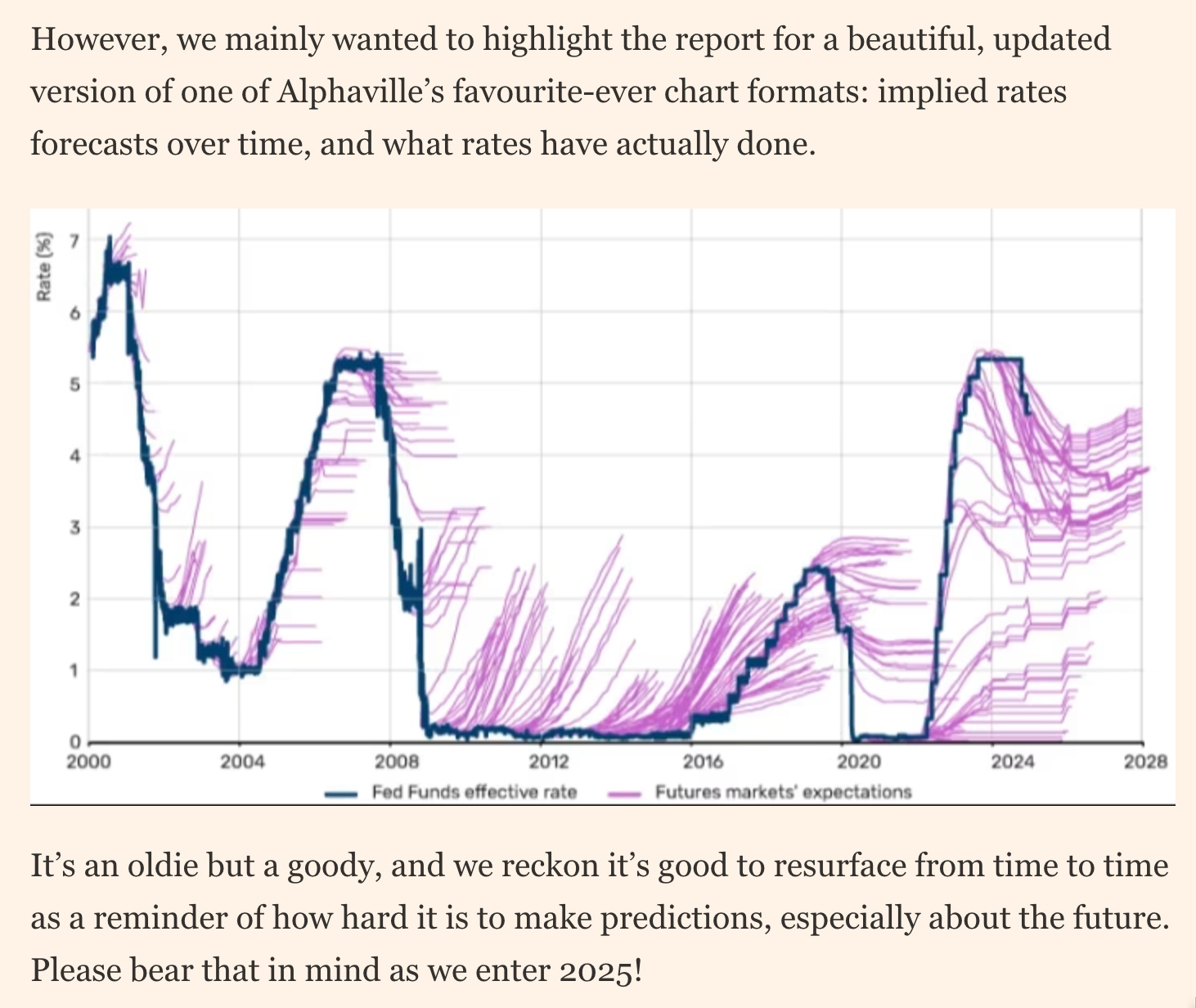
ONE IMAGE: & at Every Moment since 2000, the Average Forecast Looked Very Reasonable:
ONE AUDIO: Automation, Management, & the Future of Work:
Erik Hurst, Chrisanthi Avgerou, Professor Noam Yuchtman:
As we move deeper into the 21st century, rapid advancements in automation, robotics, and artificial intelligence continue to reshape industries, raising concerns about the potential impact on workers. Will these innovations lead to widespread job losses? Or, as history suggests, will the labour market adapt?
In this insightful lecture, Erik Hurst will explore how recent developments in automation are influencing the labour market. Drawing parallels from the early 20th-century agricultural revolution, where the adoption of tractors and automated farming equipment drastically reduced agricultural employment but did not destabilize overall employment rates, Professor Hurst will examine how current automation trends may produce different effects.
<https://overcast.fm/+AAm_PepDMJ4>
ONE VIDEO: Tedeschi-Trucks Band: Layla:
Very Briefly Noted:
Education & MAMLMs: Josh Gans’s view is that our students already find it much easier to ask questions of ChatGPT than to go to office hours or email and get an answer back a day or two later, and so they will ask ChatGPT the questions. The result is that the average quality of the answers they get back will be low: ChatGPT has been designed and trained to exhibit mammoth amounts of verbal linguistic fluency—it can be quite persuasive—but its level of substantive knowledge and misinformation is that of your average internet s***poster.
Yes, it is possible, through "prompt engineering", to do something to direct ChatGPT's attention to that part of its lossy-compressed training data that contains reliable information. But our students do not know how to do that. And even those who claim that they do know admit that it is a black and unreliable art.
In these days of MAMLMs, we have already added an average internet s***poster to our course teaching staff. And that s***poster will have many more contact hours with our students then we professors and our TAs will.
Thus I believe that, given the evolving information ecology in which our undergraduates are already immersed, we have a very strong moral obligation to do what Josh Gans and Kevin Bryan and company at All Day TA are doing—to attempt to train the MAMLMs that are students are goig to consult over the next semester as the first-line answerers of their questions, and train them to be as high-quality as possible:
Josh Gans: The Value of AI for Uneven Work: ‘Our launch of All Day TA <alldayta.com… [because] we believed that the ability to serve students well… was fundamentally limited by the scarcity of teacher attention. The aim is to use AI to relax the teacher-attention constraint <alldayta.com>. But teachers (including professors and their teaching assistants) are winners when attention is scarce. So it is not surprising that a product like ours would raise concerns. However, we believe it is important not to exclude students from the equation. They are the ones who suffer when teachers have limited attention…. The first thing to note is the volume of questions… an average of 50 [per student] by the end…. 30 per cent of questions are… [asked] to understand concepts… 30 per cent… students… searching for definitions or places… where they can learn more… 30 per cent are questions that students are otherwise embarrassed to ask…. The final [10%] ones are mostly administrative questions. The point here is that you may have thought your teaching team was serving your students, but they likely have many unanswered questions…. Variability. You can see three “events.”… The course began… a mid-term and a final…. Imagine employing a person whose job it was to wait around all semester doing very little until a couple of days when they have to do more than would be humanly possible…. The data here show just how extreme the [question-answering] work requirements of a teaching assistant are…. Ajay Agrawal… pointed out to me that this is precisely why software is valuable. It is built for tasks that have precisely this sort of unevenness. AI means that software can now step in [and]… during these surge times… triage the low-hanging but important fruit of student queries…. Those who turn up at… assistant office hours or write emails… will be… for tail questions either from struggling students or very advanced ones. Thus, teacher attention will be better allocated to where it is of the most value and away from where it is trivial. This is the promise of the “software eating the world” trend coming into the teaching world…

<joshuagans.substack.com…> <https://substack.com/@delongonsubstack/note/c-82135732>
Neofascism: Elon Musk thinks… the government should be shut down? …no Democrats should be elected to congress in 2026? …I agree that the absence of permitting reform is outrageous, but blocking that is on he Republicans. Otherwise, what is “outrageous” is the idea that the U.S. government is an effective going concern and that major shifts in what it does and how it does it should be undertaken only with substantial majority support. That is what Musk finds “outrageous”. And that is not where Trump is—Trump wants to punish his existing enemies, not make powerful new ones:
Laura Rozen: Fwiw, a delegation of visiting European lawmakers who support Ukraine told journalists today [that the] GOP reps they met with suggested Trump had given his tacit support for the supplemental [keep-the-government-open continuing-resolution spending bill]… <x.com/lrozen/status/186…>
And:
Ron Filipowski: ‘Republican elected officials are going to rue the day they got into bed with him. I guess this means Musk will back a primary candidate against Mike Johnson now. And the rest of House Republican leadership…
And:
Elon Musk: ‘Any member of the House or Senate who votes for this outrageous spending bill deserves to be voted out in 2 years… <https://substack.com/@delongonsubstack/note/c-82125249>
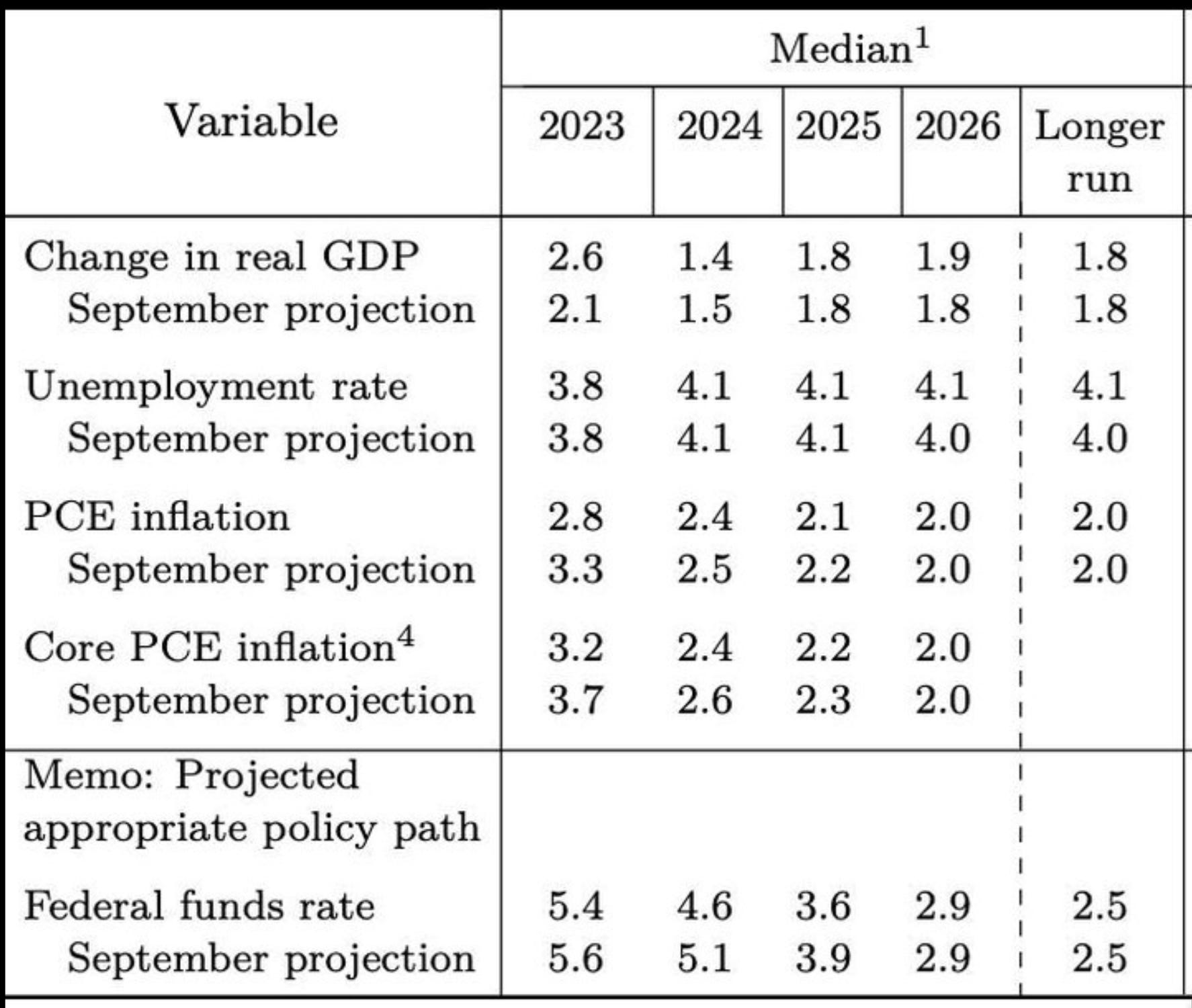
Economics: Monetary Policy: The median FOMC participant’s estimate of the neutral FF rate is now 3.0%/year, up from 2.9%/year. And there is one dissent from the Federal Reserve’s cutting its FF target from 4.5%-4.75%/year to 4.25%-4.5%/year: Beth Hammack, Cleveland Fed Bank President, attending her second FOMC meeting. The only difference in the statement boilerplate is that “in considering additional adjustments to the target range…” has been changed to “in considering the extent and timing of additional adjustments to the target range…” And the FOMC expects the FF rate to average 4.125%/year over 2025.
Jason Furman is on Hammack’s side here:
Jason Furman: A year ago the FOMC projected 2024 real GDP growth would be 1.4%, core PCE inflation would be 2.4% and the FFR would end the year at 4.6%.Instead we're set to have ~2.5% GDP growth, ~2.8% core PCE inflation but end the year with the FFR at 4.4%… <threads.net/@jason.furm…>
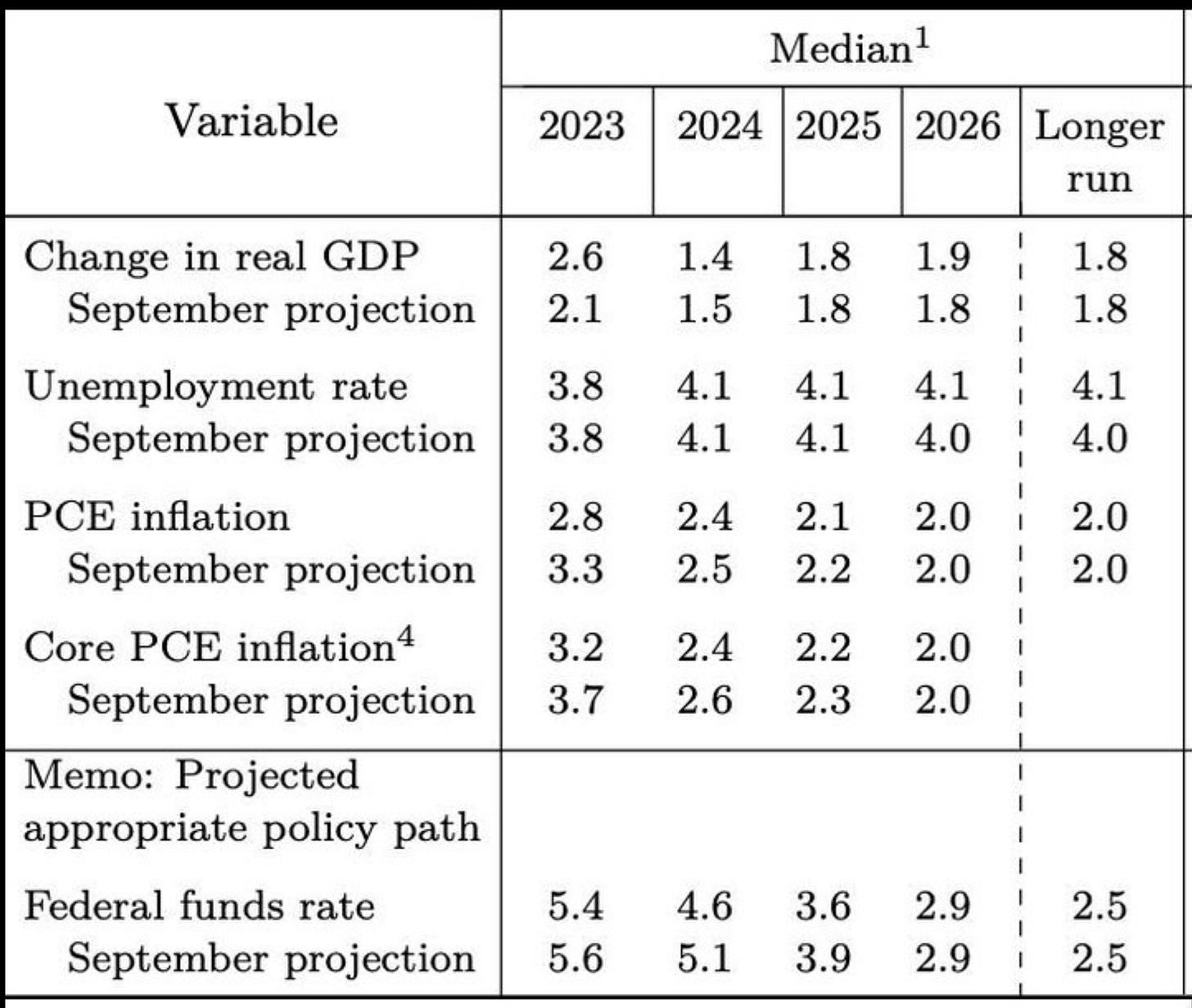
Me? There are lots of shocks to the economy in the future behind the veil of time and ignorance, and the shocks you are thinking about are unlikely to be the shocks that come. Unless you are close to the ZLB—which we are not—or unless inflation or unemployment are away from targets, policy should be near neutral. That is what “neutral” is for. I could see a Fed wanting the FF rate to be at 3.5%/year average for 2025—half a %-point above neutral. But I cannot follow the logic behind the now very slow pace of anticipated rate cuts. <https://substack.com/@delongonsubstack/note/c-82119675>
Live from the Chaos-Monkey Cage: What did you expect? Remember that Larry Hogan has been sold to us by NYT and WaPo for more than a decade as the smart, good Republican:
PatriotTakes: ‘Republican [Maryland] Governor Larry Hogan posted video of the constellation Orion and claimed the stars were “large drones” above his home. Just a reminder that Republicans want to shut down the Department of Education… <bsky.app/profile/patrio…> <https://substack.com/profile/16879-brad-delong/note/c-81678383>
Live from the Chaos-Monkey Cage: What, I ask you, did you expect?
Donald Trump: ‘I can’t tell you [whether I have spoken to Vladimir Putin]. I can’t tell you. It’s just inappropriate…. The reason that I don’t like to tell you [about my secret plan to end the war] is that, as a negotiator, when I sit down and talk to some very brilliant young people: young, young, young, young. Compared to me, you’re very young. But when I talk to people—when I start I think I have a very good plan to help, but when I start exposing that plan, it becomes almost a worthless plan…. I would like to see Ukraine—okay, ready? You have to go back a little bit further. It would have never happened if I were president. Would have never happened…. It makes it so bad. And I had a meeting recently with a group of people from the government, where they come in and brief me, and I'm not speaking out of turn, the numbers of dead soldiers that have been killed in the last month are numbers that are staggering, both Russians and Ukrainians, and the amounts are fairly equal. You know, I know they like to say they weren't, but they're fairly equal, but the numbers of dead young soldiers lying on fields all over the place are staggering. It's crazy what's taking place. It's crazy. I disagree very vehemently with sending missiles hundreds of miles into Russia. Why are we doing that? We're just escalating this war and making it worse. That should not have been allowed to be done. Now they're doing not only missiles, but they're doing other types of weapons. And I think that's a very big mistake, very big mistake. But the level, the number of people dying is number one, not sustainable, and I'm talking on both sides. It’s really an advantage to both sides to get this thing done…. I want to reach an agreement, and the only way you're going to reach an agreement is not to abandon [Ukraine]. You understand what that means, right?… Well, I just said [what] it [means]. You can't reach an agreement if you abandon, in my opinion. And I disagree with the whole thing, because it should have never happened. Putin would have never invaded Ukraine if I were president for numerous reasons. Number one, they drove up the oil price. When they drove up the oil price, they made it a profit-making situation for him, the oil price should have been driven down. If it was driven down, you wouldn't have had it wouldn't have started just for pure economic reasons. But when it hits $80, $85, and $90 a barrel. I mean, he made, he made a lot of money. I'm not saying it's a good thing, because he's also suffered, but they are moving forward. You know, this is a war that's been—this is a tragedy. This is death that's far greater than anyone knows. When the real numbers come out, you're going to see numbers that you're not going to believe… <phillipspobrien.substac…>
What Trump actually said:I won’t tell you anything—not whether I have talked to Putin, not what my plan to end the war is, not what “not abandoning Ukraine” means..
War is horrible. This war is horrible. This war, especially, is more horrible than people realize…
I want to reach an agreement to end this war…
The Ukraine-Muscovy war would never have happened had I still been president…
The Biden Administration really messed up: when the war started it should have provided massive incentives to pump more oil and should have drained the SPR in order to drive oil prices down so that Putin would have lost heavily rather than gained in terms of Russian government finances from his oil exports…
Now (a) is certainly true—he does not tell us anything. (b) I can endorse as well—it is true. (c) is a term of art—one can “want” for things to happen without being willing to lift a finger to make them happen; perhaps that is what “want” means in this case—I really do not know, and I do not believe anyone else does, perhaps not even Trump himself. (d) strikes me as a strong sign of clinical mental illness: grandiose narcissism.& (e)—I do not know whether it is true or not, whether Putin’s Muscovy has seen the price of the energy it sells rise enough to offset what the sanctions-induced fall in the quantity sold has been. But it is, I think, the only sign of active neural circuitry we have here. <https://substack.com/@delongonsubstack/note/c-81675881
Cognition: A picture is worth either a thousand or less than zero words, depending:
Alex Sunderji: How to Make Great Charts: ‘Charts are both an efficient way of conveying numerical information and a way of grabbing the eye—a form of art…. The two are in tension…. Charts are hard work for readers. Use them sparingly…. Use the chart title to tell the reader the point the chart is making…. Use a subtitle to describe the data…. Add annotations… sparingly… clarif[ying]… what each series refers to… tell[ing]… the insight they should take away…. Format your charts for mobile and desktop… square… fonts for small-screen legibility. The WSJ uses a proprietary custom font called Retina. Arial and Helvetica are good… <home-economics.us/p/how…> <https://substack.com/@delongonsubstack/note/c-81652658>>

SubStack Posts:

<https://paulkrugman.substack.com/cp/153174708>


If reading this gets you Value Above Replacement, then become a free subscriber to this newsletter. And forward it! And if your VAR from this newsletter is in the three digits or more each year, please become a paid subscriber! I am trying to make you readers—and myself—smarter. Please tell me if I succeed, or how I fail…
> Thus I believe that, given the evolving information ecology in which our undergraduates are already immersed, we have a very strong moral obligation to do what Josh Gans and Kevin Bryan and company at All Day TA are doing—to attempt to train the MAMLMs that are students are goig to consult over the next semester as the first-line answerers of their questions, and train them to be as high-quality as possible:
I hope it's possible, but prima facie it looks like a "nerd harder" strategy. Training MAMLMs to be accurate reliable question-answerers is not something we know how to do; it's true that with care a tweaked version of an existing one will be better than the un-tweaked version, but "better" isn't "good enough." (Or: if they can do it for this they can do it in any number of more profitable contexts...) Surely universities have always tried to teach students to use good sources instead of attempting to marginally improve bad ones?
To put it in another way: it looks like, to my chagrin, students might spend all of their education and perhaps professional lives working with MAMLMs; most of them will have been developed without much care or even good intent. Isn't it best for them to learn this and ways around this as early as possible?
On the other hand, I'm saying this from the quite comfortable position of not being a professor, TA, etc, having to deal with the messy reality of actual student behavior and consequences. Maybe harm reduction while something better is being worked on is what the situation calls for? I acknowledge the generational importance of the problem & I'm exceedingly glad of it not being on my plate.
This is off-topic relative to the content of your post, but I do recommend reading Tom Shippey's LRB review of "The World the Plague Made", by James Belich (https://www.lrb.co.uk/the-paper/v46/n21/tom-shippey/blame-the-gerbils). The book (which I have not read) contains the sort of "big idea" about historical development that interests you, for example:
"[Population recovery] was once thought to be relatively rapid, taking perhaps a century, but that now seems another underestimate. England did not return to its pre-plague population until about 1625, 280 years after the first strike. During most of that period Western Europe had about half the population it had in 1345. And yet 1400-1500 ‘is the very century in which Western Europe’s global expansion began’, the period of what has been called ‘the Great Divergence’ between Europe and the rest of the world. ‘The Black Death and the Rise of Europe’, as Belich’s subtitle has it, do seem to be linked in time, and it may not be a coincidence."