

CROSSPOST: JOSH MARSHALL: Thinking Clearly About the Global Authoritarian Movement
Billionaires, Bots, and a 'Bloid for Smart People: In Praise of Josh Marshall’s TPM “Talking Points Memo”. Today we have Josh’s analysis of today’s “global authoritarian movement” of Trump, Musk...

Billionaires, Bots, and a Bloid for Smart People: In Praise of Josh Marshall’s TPM “Talking Points Memo”. Today we have Josh’s analysis of today’s “global authoritarian movement” of Trump, Musk, MBS, petro‑states, and a right‑curious billionaire class whoh together form an Authoritarian International whose natural habitat is our current, parasocial, rage‑bait internet, which is a tool they hope to use to castrate democracy as we have known it, and transform liberal democratic capitalism into a very strange authoritarian oligarchical collectivism powered by its use of the information-warfare brain-hacking tools that are part of our Attention Info-Bio Tech mode of production…
I hope first-generation internet stalwart Josh Marshall and his TPM “Talking Points Memo” team <http://talkingpointsmemo.com> won’t be too mad at me for crossposting this, and thus pulling it out from behind his paywall of TPM members. Here it is at its original location in the form of a gift link, I think: <https://talkingpointsmemo.com/edblog/thinking-clearly-about-the-global-authoritarian-movement>. Do join TPM and get their “The Backchannel” member newsletter (“one must-read delivered daily to your inbox”), along with unlimited access to all TPM articles and member features: <https://talkingpointsmemo.com/memberships>.
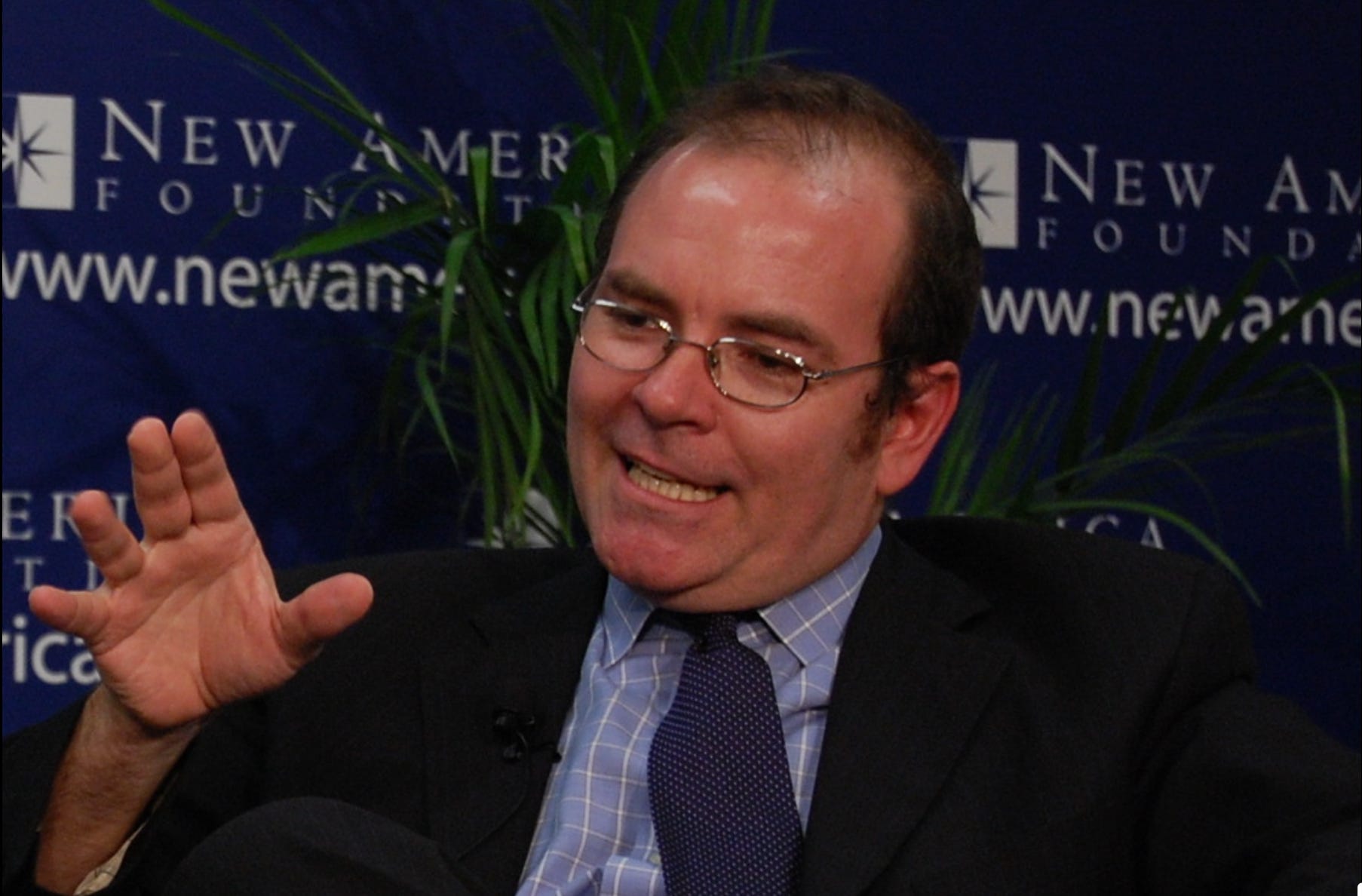
This weblog has never been in the “call to action” business. But today I want to make an ask: In our current situation, the same wetware that evolved for a roving band of 150 East African Plains Ape souls on the veldt is now thrown into a billion‑person feed curated by authoritarian‑curious plutocrat-oligarchs. So please to something to slightly unkew our mediasphere of public reason. That is my simple, bossy ask: support one of the outfits—Josh Marshall’s TPM—that is stubbornly on the side of civic democracy.
Josh Marshall: Thinking Clearly About the Global Authoritarian Movement <https://talkingpointsmemo.com/edblog/thinking-clearly-about-the-global-authoritarian-movement>>: ‘Day after day we’re seeing more signs of Donald Trump’s slipping grip not only on public opinion, but at the margins of the GOP itself. But I thought it was a good time to remind ourselves that Donald Trump isn’t the only problem. Yes, there’s the GOP, which could easily dispatch him at any point if he didn’t have an iron hold over the party. There’s the 30%-40% of voters who are solidly in the MAGA camp. Without them, Trump’s nothing. I don’t mean either of those. I’m talking about the global authoritarian movement, which includes and is even perhaps led by Trump. But it exists quite apart from him and has roots in some of the wealthiest and most powerful people and governments around the world.
I’m talking about the Authoritarian International which includes a host of authoritarian governments around the world, the princelings of the Gulf monarchies, the sprinkling of European right-ravanchist governments, the rightward portion of Silicon Valley (which accounts for a larger and larger percentage of the top owners if not the larger community), the Israeli private intel sector, various post-Soviet oligarchs and, increasingly, the world’s billionaire class. Trump is their avatar, but they exist and are now joined together in a way that will outlive him personally and electorally.
Early in the Biden administration I talked to a U.S. hedge funder who gets invited to the confabs Mohammed bin Salman has put on for the world’s billionaires since he became the country’s de facto leader. He described that world to me, a bit about its mores, what he saw. As you’d imagine for this 21st Century kind of Kremlinology, who gets to sit next to MBS at the dinners is the subject of close scrutiny and much envy. At the last of these confabs before this conversation, Jared Kushner had been given the seat of honor at something like every dinner. He was MBS’s guy. And remember, this was when Trump was at his nadir. Maybe MBS and the Saudis just had a better view of America’s political future than I did. Certainly possible. But the bigger takeaway was: this wasn’t just a transactional relationship. Kushner and MBS and Trump and MBS were a thing in and out of office.
It is not so much an anti-democratic world — though it is certainly that — as an anti-civic world. It’s a world of private, one-off deals, mutual pledges of secrecy, often enforced by soft, mutual extortion, and above all, a rejection of democratic accountability. We saw this coming into view during the late Biden administration, when Biden was already rapidly losing public support, with Elon Musk’s increasingly brazen efforts to run U.S. foreign policy from Twitter and SpaceX. The Saudis meanwhile were trying to ease Biden out of office through the manipulation of oil prices. It was no accident that Musk was advancing a strongly pro-Russian line in Ukraine, where he was most visibly trying to undermine U.S. policy.
I’ve discussed this concept in the past. So I don’t want to belabor the point of its existence. I want to point out how its forces are arrayed against civic democracy in the U.S. — quite apart from Donald Trump. This wasn’t always the case. There didn’t use to be so many U.S. billionaires. And they characteristically had economic views which aimed to preserve their wealth. But they were not clearly on the right in the way they are now. They have moved an increasingly anti-civic democratic direction as the scale of their wealth and their identity as a class has exploded. They also weren’t so increasingly allied with primitive economy petro-states of the Gulf.
The point is that they will exist no matter what happens to Trump. They command vast economic resources; they run the governments in many countries where the government never changes; they have deep tentacles into the U.S. political system and many of its key players are from the U.S. Trump didn’t create this movement precisely. But his role in global politics over the last decade solidified it as a self-conscious group and congealed it together. Any movement of civic democratic revival in the U.S. will be menaced by its continued existence. Now is the time to think about how a revived and revitalized civic democratic movement in the U.S. could combat it and avoid being destroyed by it.
Okay. That is the end of Josh’s piece.
Let me pick up the microphone.
Let me begin with a confession: If the early-2000s political internet had had a Hall of Fame, Josh Marshall would have been in the inaugural class, first ballot, unanimous. Before social media turned discourse into a weaponized Skinner box, he built something different and better: a small‑d democratic, empirically grounded, relentlessly curious public square that just happened to live on a blog called Talking Points Memo.
Marshall comes out of what we might call the first cohort of analog‑to‑digital public-reason processing nodes in the real ASI—the Anthology Super-Intelligence that is the collective Mind of the human race. Trained as a Ph.D. historian at Brown: BA from Princeton, then MA and PhD in American history with a dissertation on 17th‑century New England. His path into journalism was via writing rather than a journalism degree. In the late 1990s he freelanced for The American Prospect, then became an associate editor and later its Washington editor. He made the fateful decision around 2000 to start a one‑man politics blog. That experiment—half notebook, half newsroom—grew into TPM, with a newsroom of more than a dozen staffers and more than thirty-five thousand paying subscribers who account for most of its revenue. It is, as the Columbia Journalism Review calls it, a scrappy outfit. Operating out of a Manhattan walk‑up, it stayed on the U.S. attorneys scandal long after bigger newsrooms had moved on to the next shiny object, winning a Polk Award. It shows that a reader‑entangled form of investigative journalism was possible, and that it could matter: Josh says:
Josh Marshall: How Talking Points Memo Lasted a Quarter Century <https://www.cjr.org/the-interview/how-talking-points-memo-survived-25-years-trump-crisis.php>: ‘I describe TPM as a bloid for smart people. I wanted to punch you in the face with headlines that are edgy…. Political news… is a spectacle… fun, in a way… something to be excited about… engrossed by… entertained by…. [But] we also want you to think what we’re talking about is important, but we want those things together…
What distinguishes Marshall is not just scoops or longevity, but the way he re‑engineered the relationship between writer, readers, and story. From the beginning, TPM readers were not just “audience” but a distributed research department and early‑warning radar system: lawyers flagging obscure filings, bureaucrats pointing to buried notice‑and‑comment records, citizens spotting local oddities before national media caught on. Marshall’s voice—conversational, historically aware, openly analytical rather than faux‑omniscient—made it natural to fold that reader intelligence back into the work. The virtuous circle he describes between writing, reader response, and deeper reporting is part of what I mean by the positive internet: an online space that makes people smarter, not more brittle and enraged.
He also refused one of the grand delusions of digital media: the idea that journalism is, or ought to be, a tech startup chasing “hockey‑stick growth.” Where others took venture money and pursued scale for its own sake, Marshall slowly built a membership‑funded enterprise that treats subscribers less as eyeballs to be monetized than as co‑owners of a long‑running civic project. That business choice is normative as well as financial: it aligns TPM’s incentives with sustaining a reality‑based public sphere rather than optimizing for outrage and virality.
In today’s internet—largely colonized by authoritarian‑curious billionaires, rage‑bait algorithms, and suffering the massive dysfunctions of our Attention Info-Bio Tech mode of production—Marshall’s corner of the web remains stubbornly pro‑reality and pro‑democracy. TPM is not perfect (nothing human is), but it is one of the places where serious, good‑faith engagement with American politics still happens: careful close reads of indictments and court filings; long arcs of coverage on corruption, democratic backsliding, and institutional decay; running commentary that never forgets there are actual stakes for actual people.
If you care about the possibility that the internet can still be a commons rather than just an ad‑tech‑mediated arena for trolling and manipulation, Josh Marshall’s career is Exhibit A for the proposition that another path was—and still is—available. He showed that a small, stubborn, historically literate operation, in loyal conversation with its readers, can do real journalism, shape real outcomes, and keep alive the idea that being extremely online need not mean being permanently diminished.
And, let me say, it is on you, dear reader, to keep Josh Marshall and his TPM going. Lots of organizations that had the potential to be like TPM either vanished or lost their souls as, in Josh’s words, they:
got mesmerized by what I would call a theoretical audience—the metrics that tell you that you have ten million uniques. But that’s not an audience. That is your role in the eddies and currents of the internet. That’s not people who are really invested in you continuing to exist, and we didn’t lose sight of that. Getting spellbound by notional audience numbers was meaningful, in some ways, in a certain advertising era, but it was not a real audience…
And when the advertising era shifted, or when it turns out that the financiers and media organizations you thought were your backers do “what Condé Nast just did to Teen Vogue.”, or you suffer from one of the many ways to lose control over your mission, they either vanished or became, well, next to useless as things worth reading.
So the point of this is: I command you, I impose a geas on you: subscribe to Talking Points Memo, at least for a while, to see if it is for you: <https://talkingpointsmemo.com/memberships>.
And let me make another point. I know Josh Marshall. I have emailed him a number of times over the years, and gotten responses back. I even think I have talked to him in person. If asked “are you friends?”, I would knee-jerk answer “yes”.
But, actually, I am not friends with Josh Marshall the human being. I am friends with something I have constructed out of black squiggles on my computer screens, from which I have spun-up my personal subTuring instantiation of the mind of a Josh Marshall-like entity, run that on my wetware, and spent a lot of time reading, talking, arguing, and responding to that in my mind’s eye. 98% of what I think of as my “interactions” with Josh Marshall are things of which he is completely unaware.
This is one of the odder facts about me in 2026. If you were to ask my brain for a list of “people I spend substantial time with every month,” you would not get neighbors and you would not get any but a few of my colleagues on the fifth and sixth floors of Berkeley’s Evans Hall. You would get a somewhat motley crew of curated information sources: working-paper authors, newsletter writers, podcasters, and algorithmically-surfaced streamers and such who show up in your feeds often enough that they feel like part of the furniture of your mind.
In terms of sheer hours of exposure and emotional arousal, even most of our real relationships these days are primarily parasocial.
This is not, in itself, brand new. Radio audiences thought they knew FDR. Moviegoers thought they knew Greta Garbo. Horton and Wohl were writing about “parasocial interaction” back when broadcast television was still shiny. But these were obviously and exclusively parasocial, and these were with celebrities. The novelty is scale, intensity, and infrastructure. We have built a communications environment in which a very large share of our social cognition is pointed either at people who are not really celebrities but who do not know we exist, or at people we know but for whom the social is the part of the iceberg that is above the surface, while the parasocial is the part of the iceberg below.
Think of what a human brain evolved to do. For 99 percent of our history, social life was bounded by Dunbar’s number of 150 people: one village, a few dozen intense ties, a couple hundred weak ones. Affection, status, obligation, and reputation were anchored in reciprocal observation: if you slighted someone, you had to see them at the well tomorrow.
Now the same wetware is deployed into a mediasphere where the “village” is a billion-person feed, and the people who most reliably trigger our attention systems are those who broadcast strong signals—charisma, outrage, fear, desire—without any of the feedback that would normally tame them. The result is a strange skew in our moral and emotional budgets.
Now these not exclusively but largely parasocial ties are an enormous net benefit to me. But I do wish more of the people whose writings and speakings trigger the subTuring wetware ‘bots that inhabit my brain knew that their instantiation-avatar presences that run on my wetware and that command my attention were there, and how large a presence they are in my mental universe.
And I hope that this makes Josh Marshall aware of that.
Josh Marshall is really very good. And, as others have already noted, much of the same commentary about a sort of beneficial parasocial relationship could also be applied, for many of us, to you.
And BDL is my para social far-more-senior colleague. Deeply embedded in my wetware. I audit Heather Cox Richardson and Paul Krugman in their large lecture. But I can get a response to a comment in BDL's space; the equivalent of asking a question, sort of.