

Stochastic Parrots & Subturing Minds: THURSDAY INFORMATION SOCIOLOGY
Reading, arguing, & prompting as different ways of making absent minds speak, from Machiavelli’s study to the fan‑whir of an M5 Max., for it is a fact that black squiggles on the page and linear...

Reading, arguing, & prompting as different ways of making absent minds speak, from Machiavelli’s study to the fan‑whir of an M5 Max., for it is a fact that black squiggles on the page and linear algebra behind the screen both become voices in our heads—and that has meaning for teaching, ritual, and thought.. To what extent is there danger not just in forgetting that LLMs “only mimic,” but also in not remembering that reading i also an art of mimicry? Cf.: Phaidros <https://www.gutenberg.org/files/1636/1636-h/1636-h.htm>.
Over on the social network that is a paradisiacal garden of kittens, puppies, rainbows, unicorns, and flowers, we have:
I Am I - Earth: <https://bsky.app/profile/did:plc:qzszddraggl4m5d2wskzvetl/post/3mndawflufx2o>: ‘A parrot that ends up teaching you Latin has crossed some line the metaphor was meant to deny. Mere mimicry does not transmit a grammar you can then use. So the question is not whether it copies, but what gets carried when the copy is good enough to teach. What is actually transmitted?…
This was a comment on my: <https://braddelong.substack.com/p/stochastic-parrots-on-the-palatine>: Brad DeLong: Stochastic Parrots on the Palatine Hill: Monday MAMLMs: ‘On logs, Latin, and linear algebra: learning from a stochastic parrot; somewhat awkward questions about agency and pedagogy arising from working through one ridiculously knotty sentence of In Catilinam I with an LLM…
My reply was: That is well said!
And it was well said. And it is important. While it may be a stochastic parrot, enmeshed in the spheres of human cognition and public reason it does not act as a stochastic parrot, for it has crossed some sort of line that the “stochastic parrot” description was intended to deny.
But let me push—not back, but thoroughly sideways.
I Am I—Earth said: “mere mimicry does not transmit a grammar you can then use.”
But doesn’t it?
When I read the notes or the introduction to an edition of M. Tullius Cicero, In Catilinam I, I do not hear the voice of or directly engage with the mind of the person who wrote it. They are not sitting on the other end of a login in three dimensions, in full sensory panoply commanding my attention as they use the human social tool of voice communication to engage with me. Instead, I see a bunch of black squiggles on the page.
It is true that from those black squiggles I then spin up some kind of subterring instantiation of the author, and in some ways I “listen” to his voice through my eyes. and if I am one of those lucky enough to have trained myself to read without sub-vocalizing, I can do so five times as fast as I can actually listen to a teacher on the other end of the log. and if I am one of those lucky enough to have trained myself to be a truly active reader, I do not just listen to the text in a linear fashion. I ask questions of my Subterring instantiation of the author, and they answer me.
That, after all, is the gravamen of Niccolò Machiavelli’s 1513 letter to Francesco Vettori <https://courses.washington.edu/hsteu401/Letter%20%20to%20Vettori.pdf>.
And yet, there is no more a real mind in the black squiggles on the page arranged in the fixed pattern they were set when the book was printed than there is a real mind in the linear-algebra that uncoils from disk, squats in my computer’s memory, and sets the CPU and GPU cores to burn electron bonds in a way that starts the fan whirring as its power draw suddenly jumps from 10W to 130W.
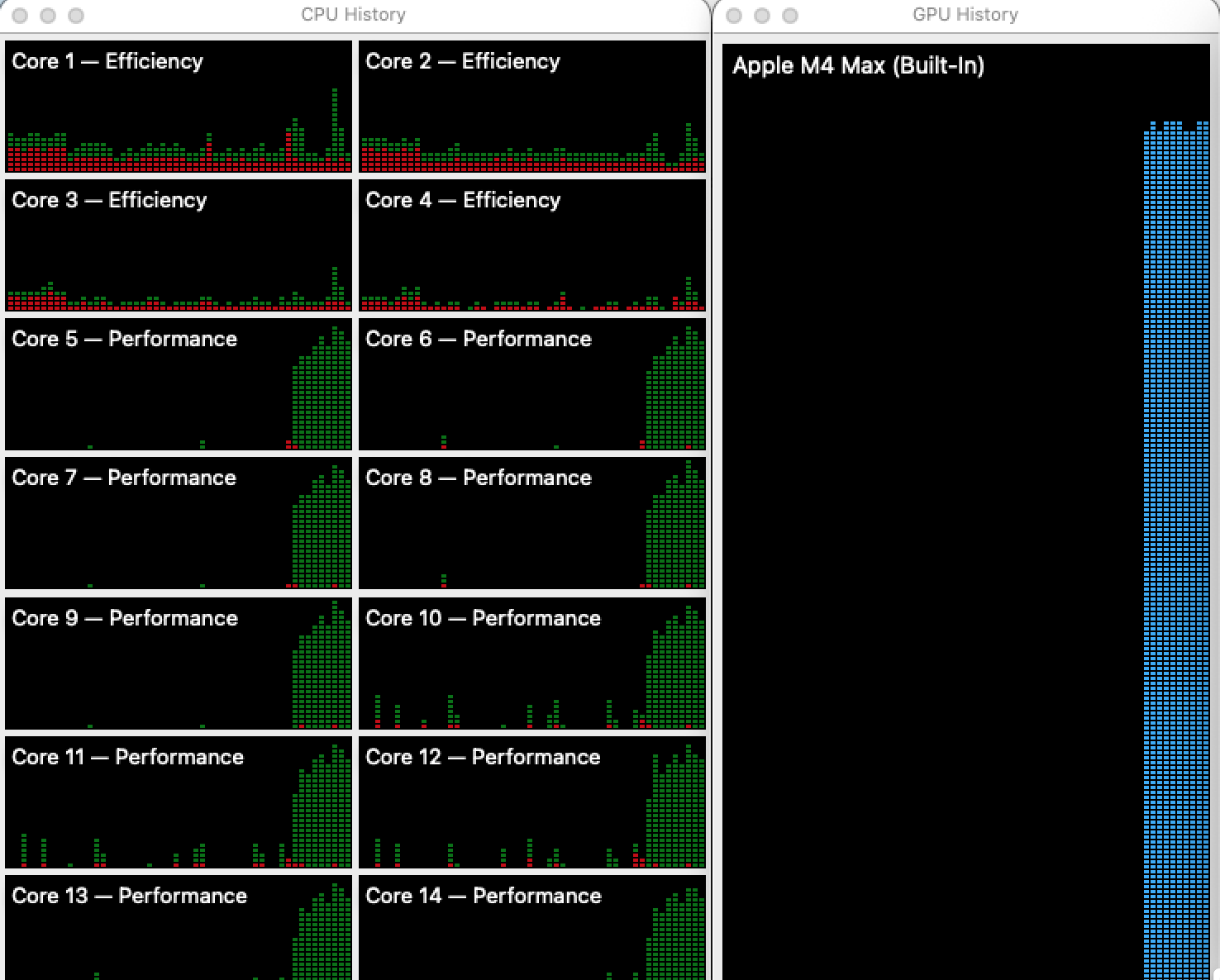
We have:
Arguing with Sokrates.
Reading a dialogue written by Platon purporting to be the faithful record of people arguing with Sokrates.
Reading not a dialogue but a treaties—nonactively, letting the words flow over you.
Reading a treatise and writing in the margin rhetorical questions of the (absent) author, which they do not answer.
Reading a treatise actively and aggressively: asking rhetorical questions of the (absent) author, and then having the subturing instantation of their mind that you have spun-up and are running on your personal wetware answer.
Talking to an LLM.
Watching an LLM put words on your screen, which you then stare at uncomprehendingly, and then copy and paste into some other document—or, worse, say out loud to somebody else.
There clearly is an enormous range in (6). There is, or maybe I should say there will be, an art to doing it well. What is that art? And how do we teach it? Ah, if I knew the answers to those questions, I would be a much wiser man.
