

Three Significant Military Powers on the European Continent?: Muscovy 'Rus, But Also an "Inner Europe" and the "Viking Alliance"
Muscovy ‘Rus, in military affairs, punches well above its relative economic weight—plus it has nuclear weapons. And NATO is no longer a thing—The Holy One Who Is alone knows what bizarre s***show...

Muscovy ‘Rus, in military affairs, punches well above its relative economic weight—plus it has nuclear weapons. And NATO is no longer a thing—The Holy One Who Is alone knows what bizarre s***show Trump would do if some balloon were to actually go up, and no strategic posture that relies on NATO for anything is now admissible. So what to do? Well, overmighty rogue powers call forth balancing alliances. Right now we can see two in the prospect of forming: call them “Inner Europe” and the “Viking Alliance” as military powers that may well solidify over the next half decade or so…
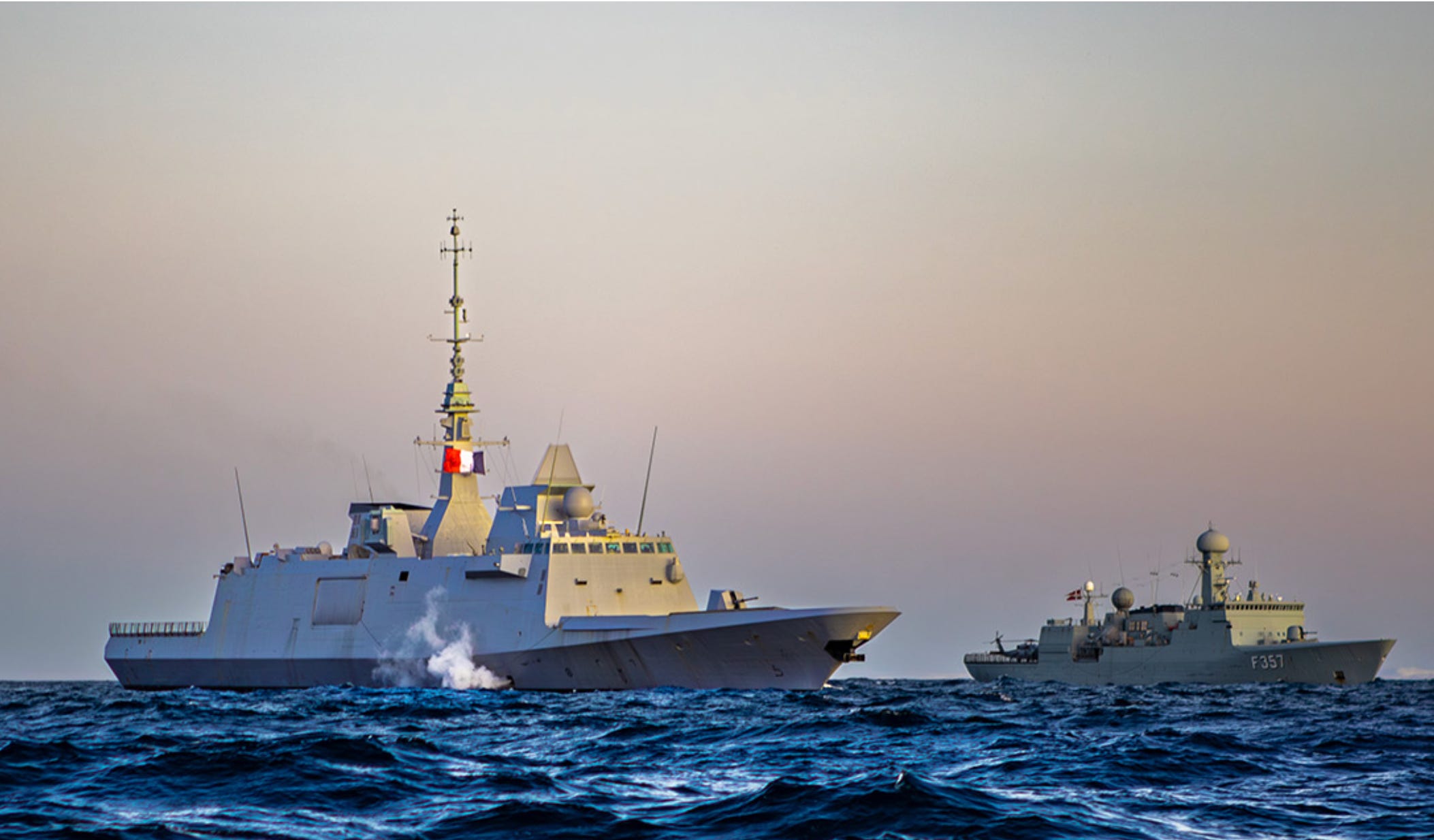
I do seriously and sincerely hope that this is truly what is now going on:
Shankar Narayan: Please Welcome the European Army: Born Without a Flag <https://www.theconcis.com/p/please-welcome-the-european-army>: ‘I almost feel bad for the right-wing trolls on the payroll of American oligarchs…. The groundwork was laid on January 6, 2026, when a small group of European states, including the U.K., moved to block the Trump administration’s attempt to test its “annexation theory” on Greenland…. [Under] the traditional script… Europe would still have been “consulting”…. Instead, seven countries spoke directly to each other… signed a joint statement… deployed small troop contingents…. The Trump–Miller axis took the off-ramp. Collective decision-making is Europe’s strength in peacetime. It is a liability when timelines compress—when deterrence fails, or when Putin doesn’t send talking points but missiles. [Then] speed matters….
Reports indicate that both the German and French governments have instructed their militaries and emergency services to prepare for war. Yes, these are contingency plans. But… now that NATO has effectively revealed what it exists for—and what it doesn’t—Europe has no choice but to build a command structure of its own. A 27-member vote to move resources… will not work…. The two-speed Europe concept isn’t new…. It’s now being pulled to the front to break policy gridlock and accelerate action on core strategic priorities. The emerging E6… [of] Germany, France, Italy, Spain, Poland, and the Netherlands… the core of Europe’s deployable mass, industrial depth, and logistical reach….
This is the birth of a European army…. A core command structure—informal, quiet, and deliberately invisible—will emerge and solidify…. There will be friction… coordination headaches. But now there is a format to solve them…
There are also strong signs of what I have been calling the Viking Alliance—possibly Eire, the UK, Norway, Sweden, Denmark, Finland, Estonia, Latvia, Lithuania, and Ukraine, with ancillaries Poland (and Roumania?) which knows that if Ukraine falls Putin is coming for them next, and Germany eager to provide financial and logistical support even if not willing to move its own forces without France, Italy, and Spain.
In rough terms: each of “Inner Europe” and the “Viking Alliance” would seriously outweigh Russia in conventional resources. The US right now spends about $1 trillion a year on defense, and dominates in long-range airlift, tankers, C4ISR, precision strike, and blue-water navy. Muscovy ‘Rus spends around $150 billion,, with its very large substantially legacy land forces, artillery, and a sizable (though aging) air and naval fleet. It’s army is now well-bloodied, but most of the people who have seen the elephant are dead or maimed—the attrition WWI style-assaults impose upon a force means that little of its combat experience becomes force-level learning.
Inner Europe spends $300 billion a year—more than all of the ex-US ex-China world put together, with a million active-duty and a million reserve-duty soldiers. Its mature defense industries (MBDA, KNDS, Naval Group, Leonardo, etc.) are very capable of producing advanced kit and munitions, if political and budgetary spigots stay open.
The Viking Alliance ex-Ukraine spends about $150 billion a year, with Ukraine currently at $70 billion. The Viking Alliance ex-Ukraine has 300 thousand active-duty soldiers, with two million reservists. Ukraine now has a million-man well-blodied army: the largest real combat-experienced land force in Europe right now, with enormous artillery, drone, and EW learning-by-doing, but heavily dependent on external ammunition and financial support.
The raw balance of conventional power in Europe vis-à-vis Muscovy ‘Rus thus looks quite favorable—conditional on at least one of the coalitions being more than talking shops, and on the political will to rapidly turn budgets and industrial policy into actual deployable formations.
Washington’s commitment to NATO under Trump is contingent and random rather than automatic. Right now Trump-world’s line is: decadent Europeans, freeloading on American protection, nagging us about values while refusing to pay for their own defense. That story was largely false even before Ukraine, but truthy enough to be politically usable.
But the emergence of an Inner Europe and of the Viking Alliance would flip the optics completely. Trump personally wants very much to align with Putin, or at least undermine the NATO alliance. But he still operates inside a political system where the Pentagon, State, and intel community will leak and lobby relentlessly if the U.S. is visibly abandoning allies under fire, even the key Trump-enablers in Congress are highly sensitive to “America is weak / America is unreliable” narratives, and business and media elites dislike anything that makes the U.S. look like a faithless partner. Appeasing or aligning with Putin then becomes not “disengaging from NATO Brussels bureaucrats”, but siding with aggressors against democracies willingly spending blood for freedom. Isolationist rhetoric polls just OK, until it is juxtaposed with allies actually fighting and dying under a democracy-vs-autocracy frame.
Inner Europe and a Viking Alliance would also shift the baseline of what “normal” allied behavior looks like: Forward deployments and joint ops (Arctic Endurance, Baltic Sentry, brigades in the Baltics/Poland) would become routine, some of them under NATO aegis with U.S. forces integrated into planning, logistics, comms. And legal and contractual commitments—bilateral security guarantees to Ukraine, industrial co-production agreements, basing and training MOUs—would multiply. Thus for Trump to “tilt to Putin” would mean actively disrupt existing cooperation, not merely fail to show up. Then domestic losers and loud critics would support the mini-lateral European formations and decisions.
Put differently: Inner Europe and the Viking Alliance would not stop Trump from wanting to align with Putin. What they would is make that desire:
More visible (because Europe is visibly fighting on the “right” side),
More politically costly (because he has to actively undercut allies who are finally doing what he claimed to want), and
More damaging to the American myth of itself (because the role reversal—Europe as hard power, U.S. as shirker—is terrible PR).
That narrows the corridor in which a pro‑Putin Trump can move without triggering a domestic and allied backlash that even he would find hard to ride out.
There is a third European army--that of Türkiye alone, with half a million active and a bit under 400,000 reserve, and a pretty good mid-tech defense industry. That's bigger than any single EU country, and indeed, the entire Viking alliance. I believe that Türkiye views its NATO membership as a useful insurance policy against a remote but frightening contingency--the Bear moving south, as it did for much of the 18th and 19th centuries. On the other hand, Türkiye is pretty much indifferent to the Bear's westward ambitions. Ukraine worries the Turks; Poland and the Balts do not.
Good points here, and an analysis new to me. My fear this may be too optimistic. A functioning alliance must have a fully coordinated military: unified command; similar weaponry; integrated communications; etc. I'm not confident either of the 2 potential Euro partnerships meet this criterion. I hope very much that they're moving in this direction, though.
"the Pentagon, State, and intel community will leak and lobby relentlessly if the U.S. is visibly abandoning allies under fire, even the key Trump-enablers in Congress are highly sensitive to “America is weak / America is unreliable” narratives, and business and media elites dislike anything that makes the U.S. look like a faithless partner."
This may still be true, but the longer Trump/Vance remains in power, the less true I fear it will become.
Europe needs time, but time's winged chariot is hurrying near.