


BRIEFLY NOTED: For 2023-12-01 Fr
BRIEFLY NOTED: For 2023-12-01 Fr
Longer-run fundamentals continuing to push r* downward; the late-1800s arrival of militarized social darwinism in the intellectual mix; don’t put too much Marx in the Legal Studies syllabus stew!...

Longer-run fundamentals continuing to push r* downward; the late-1800s arrival of militarized social darwinism in the intellectual mix; don’t put too much Marx in the Legal Studies syllabus stew!; I show my contempt for the clueless centrist chattering class; it was a bad world that had Henry Kissinger in it; Herbert Hoover was really crazed; the U.S. life-expectancy divide; Scott Galloway really loathes Facebook/Instagram; very briefly noted; & popular on Grasping Reality Substack, Auten & Splinter’s claim that the top do not have a significantly larger share than they used to is not credible, what university students want, or should want, & BRIEFLY NOTED: For 2023-11-28 Tu…
SubStack NOTES:
Economics: This accords with my thinking: slowing global productivity growth, greatly extended, life expectancy, and (I would add) increasing wealth inequality are major drivers of a rise in the desire to save. These all have been and are still putting massive downward pressure on R* . So I do not see what fundamentals are supposed to be driving any recovery of interest rates to old-normal levels:
War: “War is commanded by God”. “War is good for us élite members”. “War is what we élite members do—and why we deserve the most and the best cuts of meat”. “Defense is what we do—our role, alongside those who work and those who pray, and because our lives are short and risky we deserve glory, honor, and good things”. All of these seem to me to be qualitatively different from Admiral Stephen Luce’s 1891 declaration. In his view, war is essential for the strengthening of the nation and the race (and, perhaps, from YHWH’s perspective, the human race as well).
My view? From Darwinism and the need for a property-owning élite to justify its position came the Law of Competition and Social Darwinism, and Social Darwinism then cross-fertilized with the remnant ethoi of warrior castes to produce Admiral Stephen Luce, and he and his ilk then put the world on the road to WWI:
Human Capital: I strongly concur with Greg R. here in his criticism of the Berkeley Legal Studies 103 <jsp-ls.berkeley.edu/sites/default/files…> syllabus.
Marx's single point here is that the rule-of-law property-and-contract order is a very powerful piece of the legacy force-and-fraud domination-and-exploitation surplus-extraction for the élite gang apparatus—an apparatus that humanity has inherited from the agrarian age, and that those who benefit from it have modified along the way. We start from jurisdiction as control, domination, and surplus extraction: you work and I eat, and my bully boys will flog or crucify you if you do not work hard enough.
But it is more. We have moved to a set of relationships in which that domination-and-exploitation apparatus is masked: you obey the rules of property-and-contract or our peacekeepers put you in jail—but the rules and the initial distribution of property are so rigged that you work and I eat. And it is masked because (a) the rule-of-law property-and-contract order is also an extremely powerful framework for productive win-win coordination of our complex division of labor. And during the process of shifting from one to the other the old élite was able to shift jurisdiction into property, and new élites grew up that could turn differentials in bargaining power in the marketplace into durable transgenerational inequality as well.
Marx's biggest problem—one of his two biggest problems—amongst his many big problems—was that he could never grasp the second aspect: that the rule-of-law property-and-contract order really was also a very powerful framework for productive win-win coordination of our complex division of labor.
A productive session in a university course on this has to grapple with the tension within the dual role of rule-of-law property-and-contract.
But reading too much difficult Marx is not a good way to do that.
By contrast, the Henry Maine weeks look much more interesting to me as well:
Neofascism: The overwhelming bulk of the chattering centrist class is still trying as hard as it can to be oblivious to how much trouble we were and still are in. We came within hours of finding ourselves listening not to political debate and argument but rather to the final argument of kings:
Hell Is Empty! And All the Demons Are Here!: The only obituary Henry Kissinger should ever have:
Economic History: People forget—or never learned—how crazy Herbert Hoover was (became?) in his root-and-branch rejection of the New Deal. Between Roosevelt and Eisenhower—with his fears of the military-industrial complex and his giving the baton to Arthur Burns to do everything he could to shorten and soften the recession of 1953—on the one hand and the post-1929 Great Crash Hoover on the other, there is truly as vast a gulf as between Lazarus and Dives:
ONE IMAGE:
ONE AUDIO: Kara Swisher & Scott Galloway’s Pivot:
Sam Altman's Return to OpenAI, Meta's Underage Users, and Guest Alan Patricof
<https://megaphone.link/VMP6561068916>
This has become my favorite general-news (i.e., not economics, not history, and not pure tech podcast. This episode: much more, and Scott Galloway is really, really mad at Facebook/Instagram’s exploitation of sub-teen girls…
Very Briefly Noted:
Economics: Wei Dai &Audrey Dong: Another Look at Timing the Equity Premiums <https://papers.ssrn.com/sol3/papers.cfm?abstract_id=4586684>: ‘Three common timing approaches: valuation ratio, mean reversion, and momentum. Out of the 720 timing strategies we simulated, the vast majority underperformed relative to staying invested in the long side of the premiums. While 30 strategies delivered promising outperformance at first glance, further analysis shows that their outperformance is very sensitive to specific time periods and parameters for strategy construction...
Arvind Subramanian, Martin Kessler, & Emanuele Properzi: Trade hyperglobalization is dead. Long live…? <https://www.piie.com/sites/default/files/2023-11/wp23-11.pdf>: ‘A new era—characterized by the deglobalization of goods and the slower yet persistent globalization of services—has supplanted… hyperglobalization. The halt in manufacturing’s shrinking share in global value added may have mitigated even stronger deglobalization caused by… slowing income convergence, financial deglobalization, and more restrictive trade policies. The paper also documents the end of disruptive North-South trade and highlights a new China puzzle, in which sharp internal trade contraction coexists with surging global export shares. It also reveals a positive correlation between mercantilism and both trade and growth at the global level…
Economic History: Daniela Vidart: Revisiting the Link between Electrification and Fertility: Evidence from the Early 20th Century United States <https://lsa.umich.edu/econ/news-events/all-events.detail.html/113724-21831508.html>: ‘I empirically disentangle the two channels linking electrification and fertility… time-saving appliances that reduce the time needed for child-rearing… the rise in female wages which raises the opportunity cost of childcare. I then use these empirical estimates to calibrate a model…. I find that electrification explains 4.6% of the overall fertility decline in 1900-1940 in the US, and that the opportunity cost channel is preponderant…
Global Warming: Barry Ritholtz: EV or Hybrid? What the Next Decade Holds <https://ritholtz.com/2023/10/ev-or-hybrid/>: ‘This transition from ICE to EV won’t be complete until… issues get resolved. Charging infrastructure and range… build quality and price…. Car makers can build high-quality EVs at reasonable prices; whether the companies can make any money on these is a different question…. We are probably a decade away from when the price and quality differences between ICE and EV vehicles disappear. And even as that transition occurs, Gasoline ICE engines continue to get better. The solution I have embraced is the Plug-In Hybrid (PHEV)…
Neofascism: Will Oremus: ‘Elon falls for a fabricated headline <https://www.threads.net/@crumbler/post/C0Mg_JZLPfu> claiming a journalist sentenced for child porn was the one who debunked Pizzagate (he wasn't), and decides maybe Pizzagate was real after all (it wasn't).This is what happens when you get your news from X, folks… Crumbler: ‘And yet journalists still show up to post their links there every day because maybe they'll get more likes there than they do on other websites… Ezra Klein: ‘I find it astonishing at this point. To keep adding value to a platform that the owner is weaponizing for this kind of toxicity is not a neutral choice…
Janan Ganesh: American and European populism aren’t the same <https://www.ft.com/content/4f50f23a-ce1d-4778-91aa-ebebca1d61d3>: ‘The US variant is much more of a personality cult…. As bad as Britain is at high-speed rail and IPOs, I’d rather take my chances here than in many western democracies over the coming years, thanks. Another thing about the UK: it is a good place from which to compare American and European populism. So often conflated with each other, it is the differences between them that stand out ever more to an observer in this in-between place…. We still don’t know what American populism amounts to without the elemental personal force of Trump…. The hardest thing to convey about the Trump phenomenon, especially to intellectuals, trained to think in terms of philosophical doctrines, is how secondary the content of it has become. European populism is about something. American populism is, to an amazing extent, about someone…. The raw individual clout of Trump unites and fuels America’s hard right. What serves the equivalent role in Europe is a sense of demographic and cultural siege. The difference is that Trump will one day be gone.
Journamalism: D.K. Thompson: ‘To be maximally diplomatic to Michael Lewis: 1. He is an amazing writer and it is 100% in bounds to humanize and complicate frauds and villains like SBF. Complex villainy can be the stuff of great art. 2. But Lewis’ commentary on the trial consistently sought to poke holes in the prosecution in a way that felt partial and inappropriate. 3. Comparing “journos joking about the conviction of a once-billionaire thief” to “family picnics at a lynching” is a nope of the highest order…
William D. Cohan: Michael Lewis Has More Thoughts on S.B.F <https://puck.news/michael-lewis-has-more-thoughts-on-s-b-f/>: ‘The bestselling author of Going Infinite hits back at the “shit show” criticism of his book, the spectacle inside the courtroom, and S.B.F.’s putative $5 billion offer to Trump…. Michael [Lewis] said it was “very clear” from the outset that S.B.F. was going to be convicted, in large part because the prosecution was very clever about the evidence it introduced at trial, and the fact that the various witnesses who testified against S.B.F., who… had already pleaded guilty, had more or less changed their tune…. “The thing that seemed to be most distorted was the accounts of the other members of the inner circle,” Michael told me. “I don’t think they said anything that was falsifiable, but I think they pretty radically changed their descriptions of how they felt. Like, they remembered feeling things that they didn’t obviously feel at the time. And they made it all sound much more damning than it was”…
Kevin Dugan: The Real SBF Stood Up <https://nymag.com/intelligencer/article/what-sam-bankman-fried-ftx-case-revealed.html>: ‘An open-and-shut case finally revealed the criminal behind the legend…. The case was almost comically open-and-shut given… the attempts by… certain journalists to paint him as a complicated, tragic figure…. Mega-best-selling author Michael Lewis… was still suggesting [SBF] was a guileless savant with the best of intentions even after the trial started…
Typography: Compart <https://www.compart.com/en/unicode/U+10196>: ‘Unicode Character “𐆖” (U+10196)…. Roman Denarius Sign…


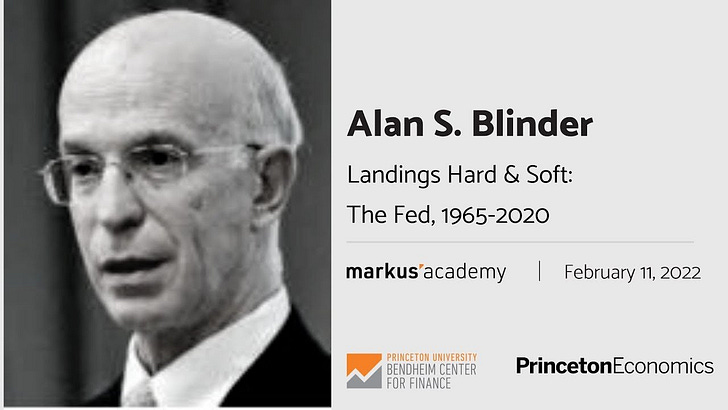
One Image: Cohort-Life Expectancy.
What ks going on by income quintiles across the cohorts is clear. Cohort-Life expectancies come closer to the actual "life years lived" experience than period-life expectancies. A period-life expectancy calculation basically imagines the current period's age distribution of mortality as a life itself to calculate the expectancy (under some very unreasonable assumptions). But people may go on to live longer or shorter than what the current period's age distribution of mortality may imply. The age distribution of mortality could be worse or better in the future.
But that poses a dilemma. If the bulk of the 1960 cohort is still alive, how does one know their cohort life expectancies accurately? You can't (without some assumptions). All you have is truncated information and a truncated life table. A cohort life table won't be complete until the entire cohort has perished. We are then left with the awfully adequate period-life expectancies.
One way to know how period-life expectancies (PLE) could mislead is to study the relationships between period-life expectancies in the past along with cohort-life expectancies (CLE) of the cohorts that have perished. Under what circumstances did PLE in -- say 1900 -- underestimate/overestimated how long a cohort ended up living in future years? Why did that happen? This has been done, though not with life tables, themselves, but with data on deaths/mortality to study aging.
"An open-and-shut case finally revealed the criminal behind the legend"
When the legend becomes criminal, print the crime.